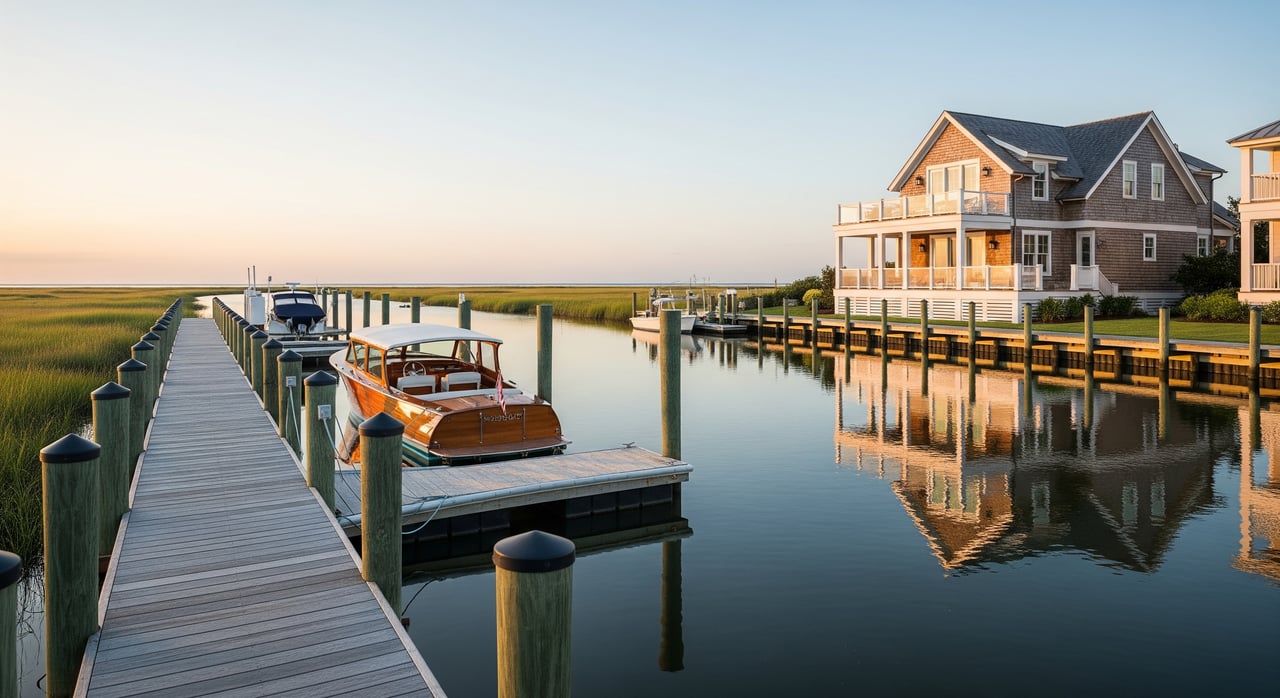
Torn between canalfront and soundfront living in Southern Shores? You are not alone. Many buyers come to the Outer Banks dreaming of a dock, a boat, and sunset views, then realize the choice of waterfront type shapes everything from daily boat use to long‑term upkeep. This guide breaks down the differences so you can match your lifestyle, boat plans, and budget to the right shoreline. Let’s dive in.
Canalfront vs. soundfront: what it means
Southern Shores sits on the east side of Currituck Sound, with man‑made canals that connect neighborhoods to the open sound. When you buy canalfront, your lot borders a dredged canal that offers protected boat access. Soundfront means direct frontage on Currituck Sound, a wide, shallow estuary known for big skies, wildlife.
Both options can be ideal. The right fit depends on how you plan to boat, the kind of view you want, and what you are willing to maintain.
Boating access and draft
If boating is a top priority, start here. Currituck Sound is relatively shallow in many areas, with flats just a few feet deep at low water. Channels exist, but depths vary and can shift.
- Canalfront: Best for frequent, easy outings in shallow‑draft boats like skiffs, bay boats, small center consoles, pontoons, and personal watercraft. Canals are typically dredged to create usable depth at the dock, though depths can change over time. Expect reliable access for drafts around 2–3 feet, and verify current depth at mean low water.
- Soundfront: Gives you immediate access to open water and longer cruising range across the sound. Actual access for deeper‑draft boats depends on your proximity to a maintained channel. If your boat needs more than a shallow draft, confirm the route and the most recent surveyed depths.
Views, exposure, and daily feel
Think about how you want your days to feel on the water.
- Soundfront: Offers wide, panoramic views across Currituck Sound, with sunrise or sunset potential depending on orientation. You will likely see waterfowl and wading birds and enjoy an open‑water feel. You also get more wind and wave energy at the shoreline, which can affect docking comfort and design.
- Canalfront: Delivers a private, protected backyard‑dock lifestyle. Views are narrower and framed by neighboring docks and homes, but the setting is calmer and typically easier for daily boat handling.
If you crave broad horizons and wildlife watching, soundfront is hard to beat. If you want simple, sheltered docking and quick hops on the water, canalfront wins.
Lot layout and dock options
Lot shape and shoreline conditions affect how you build and use your waterfront.
- Canalfront lots are often long and narrow, with bulkheads, piers, and boatlifts set up for direct backyard access. Neighboring docks may be close, so turning room and maneuvering space matter.
- Soundfront lots tend to have wider frontage to capture views. Near‑shore areas can include marsh or seagrass beds, which influence where a dock can go and how long it needs to be. Some shorelines use bulkheads; others rely on living shoreline approaches where allowed.
On either frontage type, confirm where a future dock could be located and what size or configuration would be permitted before you commit to a plan.
Permits and POA rules to expect
Waterfront improvements usually require permits. In North Carolina’s coastal zone, docks, bulkheads, and boatlifts commonly need approvals under state coastal management rules, and some work in navigable waters may need U.S. Army Corps authorization. The Town of Southern Shores and Dare County can have additional requirements.
If a canal is private or managed by a neighborhood association, owners typically share responsibility for canal maintenance. Review community documents for:
- Dock size and design standards, including piling types and lift styles
- Limits on boat length or number of boats at a lot
- Vegetation and buffer rules near the water
- Procedures for variances
- Special assessments for dredging or shared shoreline repairs
Before you buy, request covenants, plats, meeting minutes, and recent assessment history so you understand costs and restrictions.
Flood zones, elevation, and insurance
Both canalfront and soundfront properties sit in coastal flood zones. Many homes are built on pilings with elevated living areas to meet base flood elevation requirements. Insurance premiums will depend on your specific FEMA flood zone, freeboard requirements, the elevation of the lowest finished floor, and proximity to open water.
Because soundfront homes experience more wind and wave exposure, design and construction choices may differ from a sheltered canal. Ask for recent flood zone maps and get insurance estimates for both homeowners and flood coverage on the kind of structure you intend to own.
Maintenance and long‑term costs
Every waterfront comes with upkeep. The type of frontage changes the maintenance mix.
- Canalfront: Expect periodic dredging needs, bulkhead upkeep, and routine dock and lift maintenance. If your canal is part of a maintenance district or association, budget for possible dredging assessments.
- Soundfront: Prepare for stronger wind and wave exposure, which can increase dock and shoreline repair frequency after storms. Shoreline stabilization methods may be regulated, and marsh edges can shift.
Ask for service records on existing bulkheads, lifts, and docks and for any history of canal dredging or shoreline projects in the area.
Decision guide: which fits your lifestyle
Choose canalfront if you:
- Want protected, everyday access for a shallow‑draft boat and a private lift
- Prefer easy docking and quick fishing trips on the sound
- Like a backyard‑dock lifestyle more than a sweeping horizon
- Are comfortable with closer neighbor proximity and possible shared dredging costs
Choose soundfront if you:
- Value broad, open views and wildlife watching
- Plan to cruise the sound frequently and want a bigger on‑water feel
- Are prepared for more wind/wave exposure and potentially higher resilience design costs
- Will verify channel access and depth for your boat’s draft
A smart middle ground can be a canalfront lot with short, clear access to a maintained channel. You get shelter at the dock and fast runs to open water. As always, verify turning room, dredging history, and the route to the channel.
Due diligence checklist for any waterfront lot
Do these checks before you finalize a purchase:
- Dock and navigation
- Confirm surveyed depth at mean low water at the proposed or existing dock location.
- Map the route to the nearest maintained channel and confirm the latest depths.
- Check for restrictions on boat length, lift type, and dock design.
- Ownership and maintenance
- Determine whether the canal is private or public and who is responsible for dredging.
- Review covenants, plats, and any recorded canal or access easements.
- Ask for 5–10 years of assessment history and any planned capital projects.
- Permits and environmental constraints
- Identify seagrass, shellfish areas, and marsh edges that could limit dock length or dredging.
- Understand all required permits for docks, lifts, bulkheads, or shoreline stabilization.
- Flood and insurance
- Verify FEMA flood zone and base flood elevation for the lot and planned structure.
- Get insurance quotes for homeowners and flood based on the home style you want.
- Day‑to‑day practicality
- Evaluate exposure at the dock to wind and waves and design needs for lines and pilings.
- Check maneuvering room in the canal and any interference from neighboring docks or vegetation.
- Plan where and how you will launch, haul out, or store your boat in the off‑season.
How we help you compare options
Choosing between canalfront and soundfront in Southern Shores is not just about the view. It is about depth, access, permits, resilience, and day‑to‑day usability for the boat you actually run. With decades of OBX experience and hands‑on marina and dockage expertise, we help you:
- Match your boat and boating style to specific lots
- Read flood maps, covenants, and plats so you avoid surprises
- Coordinate local surveys to verify depths and turning room
- Outline permit paths for docks, lifts, and shoreline work
- Estimate ongoing costs for dredging, bulkheads, and insurance
Ready to compare specific properties or plan a dock that fits your boat? Connect with Suzanne Baer for a Free Local Consultation and start your search with confidence.
FAQs
What is the main difference between canalfront and soundfront in Southern Shores?
- Canalfront lots sit on dredged canals that offer protected docking and easy shallow‑draft access, while soundfront lots face Currituck Sound with wide views and more wind/wave exposure.
Can I run a deeper‑draft boat from a soundfront home on Currituck Sound?
- Possibly, but only if a maintained channel is nearby and depths suit your draft; verify the route and the most recent surveyed depths before you buy.
Do canalfront properties always have enough depth for my boat at low water?
- No. Canal depths vary by location and maintenance history; get a current depth measurement at mean low water and check post‑storm conditions.
Who pays for dredging in a private canal in Southern Shores?
- In many cases owners within the community share responsibility through a POA or maintenance district; review covenants, minutes, and assessment history for details.
What permits do I need for a new dock or boatlift on the Outer Banks?
- Coastal projects typically require state coastal permits and may need U.S. Army Corps authorization, plus local approvals from the Town of Southern Shores or Dare County.
Are flood insurance costs higher on soundfront than canalfront?
- It depends on your flood zone, elevation, and construction details; obtain property‑specific quotes for both homeowners and flood policies.
Will seagrass or marsh affect my ability to build a dock on soundfront?
- Yes, near‑shore habitat can limit dock placement and length; plan on a site review early and confirm what is permitted.
Is there usually enough turning room for a center console in Southern Shores canals?
- Many canals allow smooth maneuvering, but widths and neighboring docks vary; confirm turning room at the specific property with a site visit and measurements.