Trying to choose between a condo and a beach house in Kitty Hawk? You are not alone. Both options can deliver ocean time, rental potential, and a great Outer Banks base. The best fit depends on how you plan to use the home, your financing, and how much maintenance you want to take on. In this guide, you will compare costs, insurance, financing, rental dynamics, and a practical due-diligence checklist so you can move forward with confidence. Let’s dive in.
Kitty Hawk market at a glance
Kitty Hawk sits in a classic coastal market with strong summer demand and quieter winters. County tourism data confirms high peak-season rates and solid visitor numbers, which is good news if you plan to rent seasonally. You should expect most bookings to cluster in June through August, with a pickup in May and September and a slower winter stretch. For a big-picture view of demand and pricing, review the Dare County tourism board’s metrics on seasonal performance and rates in the Outer Banks region in the latest county packet.
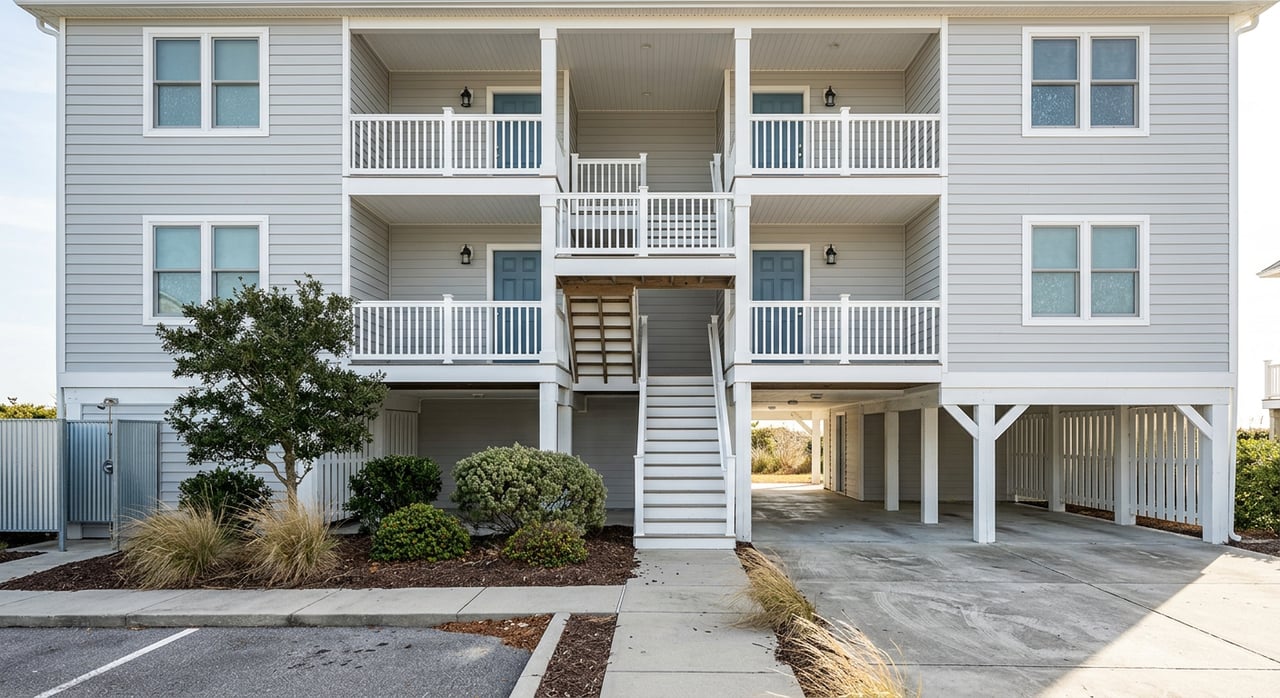
Condos in Kitty Hawk often list below detached single-family beach houses. Pricing varies widely by location, view, age, updates, elevation, and proximity to the ocean. Use current MLS comps for any property-level decision and treat public portals as ballpark only. If you plan to finance, the property type also affects your loan options, which we cover next.
Upfront costs and financing
How condo loans differ
When you finance a condo, lenders evaluate both your unit and the entire project. Fannie Mae and Freddie Mac have project standards that cover reserves, insurance, owner-occupancy ratios, and litigation disclosure. If a project is not considered “warrantable,” you may face a larger down payment or fewer loan options. Ask your lender early if the project is eligible or if a full project review is needed, and review Fannie Mae’s project standards to understand the criteria in the Selling Guide.
Practical steps for condo buyers:
- Ask your lender to confirm the project’s status with Fannie Mae, Freddie Mac, FHA, or VA.
- Confirm what loan types are available for second-home or investor use.
- If the condo is non-warrantable, expect stricter terms. Some lenders may require a higher down payment for second-home or investor loans.
Single-family beach house financing
Detached homes are typically simpler to underwrite because there is no condo project review. You still verify flood and wind coverage, but the loan focuses on the property and your qualification. Expect higher purchase prices than many condos, which can mean larger loan amounts. That tradeoff may be offset by stronger peak-season rental potential, depending on size and location.
Ongoing costs to compare
HOA and POA dues for condos
Condo dues often cover exterior maintenance, landscaping, amenities, and a master insurance policy. Some associations include flood insurance, water, or internet in the fee. Always request the full resale package, including the current budget, reserves, meeting minutes, and master insurance declarations so you know what you are buying. The Community Associations Institute outlines best practices for reviewing reserves, special assessments, and financial health in its guidance.
Watch for red flags:
- Low reserves or repeated special assessments.
- Pending litigation or large owner delinquencies noted in minutes.
- Insurance deductibles or gaps that shift major costs to owners.
Property taxes and occupancy tax
Dare County publishes base property tax rates per $100 of assessed value. The county’s revenue-neutral rate has been stated as $0.2632 per $100. Final parcel taxes depend on municipal and special district add-ons, so verify on the county site for the specific property in the county notice.
If you plan to rent short-term, you must collect and remit the county’s 6% occupancy tax on gross rental receipts. Registration and monthly remittance are handled by the Dare County Tax Department. Do not assume a platform remits everything on your behalf. Confirm registration and reporting requirements directly with the county on the occupancy tax page.
Insurance, flood zones, and wind coverage
Coastal properties face flood and wind exposure that affect insurability and premiums. Many homes near the ocean sit in FEMA AE or VE zones, which often require a separate flood policy in addition to homeowners coverage. North Carolina also operates residual markets, including the Coastal Property Insurance Pool and FAIR Plan, for hard-to-insure properties. Expect higher wind hurricane deductibles in these areas and shop early for quotes. The state’s hurricane claims toolkit is a helpful primer on coverage and claims preparation from the NC Department of Insurance.
Kitty Hawk’s planning documents also address coastal resiliency and beach protection projects. Review town materials for context on beach nourishment and long-term shoreline planning in the town’s resiliency plan. Your goal is to understand risk, mitigation efforts, and how those items factor into insurance costs over time.
Rental potential and management choices
Seasonality and pricing
The Outer Banks is a classic seasonal market. County tourism reporting shows high Average Daily Rate during the summer with lower winter occupancy. Local STR dashboards often show Kitty Hawk ADRs in the mid-range for the region, with occupancy clustering in summer and a shoulder season in May and September. Use a current market snapshot tool to calibrate rates and seasonality for your property type with an example of regional market intel. Pair that with the county’s tourism packet for broader context on peak demand here.
Condos often rent well to couples and small families with steady week-to-week demand. Larger detached homes can command premium summer rates for group stays, but those same homes may sit open in winter. Model cash flow monthly so you understand off-season carrying costs.
Property management models
You can hire a full-service manager or run a marketing-first model. Full-service firms typically handle pricing, guest support, cleaning, and maintenance and charge a higher commission. Public filings from national managers reference average owner commissions in the mid-20s as a benchmark see SEC filing. Marketing-only options may charge a lower fee, but you will coordinate cleanings, maintenance, and guest services yourself. Your choice affects net yield and your time commitment.
Typical operating costs to budget:
- Management fees and merchant processing
- Cleaning and laundry per turnover
- Utilities, linens, and supplies
- Routine and seasonal maintenance for decks, roofs, and HVAC
- Insurance and property taxes, plus monthly occupancy tax remittance
- HOA or POA dues for condos
Lifestyle and use tradeoffs
Why choose a condo
- Lower day-to-day maintenance with more lock-and-leave convenience.
- Dues often include exterior care and amenities, which simplifies ownership.
- Shared governance and guest rules can reduce noise and crowding, but also limit certain changes. Review governing docs and house rules carefully. For a clear framework on reserves and special assessments, consult CAI’s checklist here.
Why choose a beach house
- More control over your property, layout, and outdoor space.
- Often stronger peak-season rental potential for larger groups.
- Higher maintenance and potentially higher insurance where wind and flood exposure are greater. Ask for the parcel’s FEMA flood zone and obtain quotes for both wind and flood coverage early.
A quick decision framework
Ask yourself:
- Do you want minimal hands-on ownership? A condo may fit if you value simplicity and are comfortable with HOA rules.
- Do you want maximum privacy and larger summer rents? A detached home may fit, but expect higher carrying costs.
- How important is oceanfront proximity versus lower insurance and maintenance costs inland or westside?
- Will you rent year-round or primarily in summer? Model revenue by month and compare it with fixed costs like taxes, insurance, and HOA dues.
- Does your financing depend on a warrantable condo project? Clarify with your lender before you offer.
Due-diligence checklist before you offer
Use this list whether you are considering a condo or a detached home:
- Condo resale package. Request the current budget, balance sheet, latest reserve study, 12 months of meeting minutes, insurance declarations, owner-occupancy report, and any notices about litigation or special assessments. Review guidance on reserves and red flags from CAI here.
- Rental records. If you plan to rent, ask for 12 to 24 months of rental history, the management agreement, and copies of county occupancy tax filings. Confirm registration and remittance requirements with Dare County on the occupancy tax page.
- Flood and elevation. Request the Elevation Certificate if available and confirm the FEMA zone. Get early quotes for wind and flood coverage. The NC Department of Insurance provides a clear, consumer-friendly overview of hurricane coverage topics in its toolkit.
- Local rules and state law. Confirm whether short-term rentals are permitted for the property and by the HOA, and review safety and lease requirements under the North Carolina Vacation Rental Act Chapter 42A.
- Lender checks. Ask your loan officer to confirm condo project eligibility and include HOA dues in your pre-approval. Review the scope of project standards with Fannie Mae here.
- Taxes. Verify the current property tax estimate for the parcel and any municipal add-ons. For short-term rentals, register for the county’s 6% occupancy tax with Dare County.
- Town context. Explore Kitty Hawk’s coastal resiliency and beach protection materials to understand long-term community planning in the town plan.
Ready to pick your path?
If you want turn-key ease with predictable upkeep, a condo can be a smart choice. If you want more control, room for larger groups, and potential for premium summer weeks, a beach house might be the right fit. Either way, your best decision comes from upfront verification of financing, insurance, HOA health, and real rental numbers. If you would like a local, plain-English walkthrough tailored to your goals, connect with Suzanne Baer for a free consultation.
FAQs
What is the occupancy tax rate for short-term rentals in Kitty Hawk?
- Dare County requires a 6% occupancy tax on gross receipts, with monthly registration and remittance handled by the county tax office. Details are on the county’s site here.
How are property taxes calculated in Dare County?
- The county’s revenue-neutral base rate has been stated as $0.2632 per $100 of assessed value, with town or district add-ons where applicable. See the county notice here.
Do condo HOA fees include insurance in Kitty Hawk?
- Many condo associations carry a master policy and some include flood, water, or internet in dues, but coverage varies. Always review the resale package and master policy, and use CAI’s guidance on reserves and assessments here.
How seasonal is rental income in Kitty Hawk?
- Expect strong summer demand and softer winters. County tourism reporting shows high peak-season rates and classic Outer Banks seasonality. Review the latest packet for context here.
What insurance should I budget for near the beach?
- Plan for homeowners coverage with a wind hurricane deductible plus a separate flood policy if the home is in a FEMA AE or VE zone. If private carriers decline coverage, North Carolina’s residual markets may be options. See the NC DOI’s hurricane toolkit here.
Are short-term rentals allowed in all Kitty Hawk condos?
- Not always. Town rules and HOA documents vary. Confirm with the town planning office and your HOA, and make sure your lease and deposits comply with the North Carolina Vacation Rental Act Chapter 42A.