Buying in Kitty Hawk can feel exciting right up until you see the words flood zone on a property report. If you are shopping for a primary home, second home, or investment property on the Outer Banks, you want clear answers about risk, insurance, and long-term costs. This guide walks you through how flood zones work in Kitty Hawk, what affects insurance pricing, and what to review before you close so you can move forward with more confidence. Let’s dive in.
Why flood zones matter in Kitty Hawk
Kitty Hawk sits on a barrier island, so flood risk is part of everyday coastal ownership. According to the Town of Kitty Hawk flood information page, ocean overwash, hurricane-force winds, heavy wave action, and erosion all shape local flood conditions, and most of the town’s 8.8 square miles is in a Special Flood Hazard Area.
That does not mean every property faces the same level of exposure. It does mean you should treat flood review as a core part of your buying process, not a side issue. In Kitty Hawk, the map zone, base flood elevation, building design, and insurance setup all work together.
Start with the official flood maps
Your first stop should be the FEMA Flood Map Service Center, which is the official source for National Flood Insurance Program maps. Locally, Kitty Hawk also points buyers to its Forerunner property profiles and the Dare County flood-zone webmap for parcel-level review.
These tools help you confirm more than just the label on a map. Dare County’s viewer also compares previous and current effective flood maps, which matters because a property may appear similar on the screen even when the base flood elevation has changed.
Common flood zones explained
Zone AE
Zone AE is part of the base floodplain, and FEMA provides a base flood elevation for it. The FEMA glossary for Zone AE defines BFE as the elevation of the 1-percent-annual-chance flood surface.
For buyers, AE usually means you need to pay close attention to the home’s first-floor elevation, enclosure details, and whether utilities are elevated correctly. Those factors can affect both compliance and insurance cost.
Zone VE
Zone VE is a coastal high-hazard area where wave action and fast-moving water can cause extensive damage. FEMA notes that VE zones have stricter construction requirements.
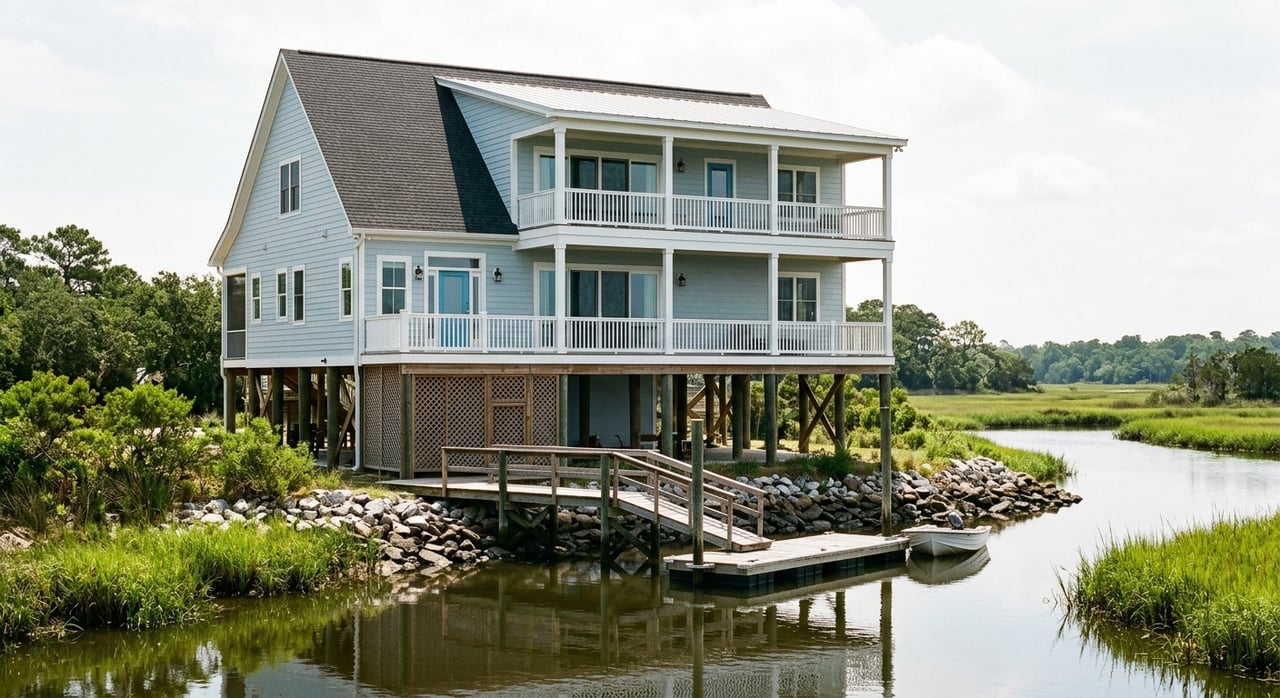
In Kitty Hawk, this is especially important because local rules require piles in VE zones, do not allow structural fill or raised slabs, and use breakaway construction below the required elevation. If you are buying in VE, the structure itself deserves a very careful review.
Zone AO
Zone AO usually refers to shallow flooding, generally 1 to 3 feet deep. In coastal areas, FEMA says it can reflect wave overtopping or sheet flow.
That may sound less severe than a wave hazard area, but it still affects design, permitting, and insurance. You will want to verify how the house was built to handle that condition.
Zone X
Zone X can be shaded or unshaded. Shaded Zone X is considered a moderate hazard area, while unshaded Zone X is considered minimal hazard and usually lies outside the 500-year floodplain.
Still, FEMA is clear that there is no true no-risk zone. On a barrier island like Kitty Hawk, lower risk is not the same as no risk.
Kitty Hawk standards buyers should notice
One of the most important local details is that Kitty Hawk’s construction standards are stricter than minimum baseline requirements in several zones. According to the town’s residential building guide, AE requires BFE plus 3 feet of freeboard or 8 feet NAVD, whichever is greater. VE and AH require 1 foot of freeboard, while X or shaded X uses 8 feet NAVD or higher natural grade.
Why does that matter to you as a buyer? Because a home that was built or improved to meet stronger elevation standards may perform differently in both real-world flood conditions and insurance pricing than a nearby home in the same mapped zone.
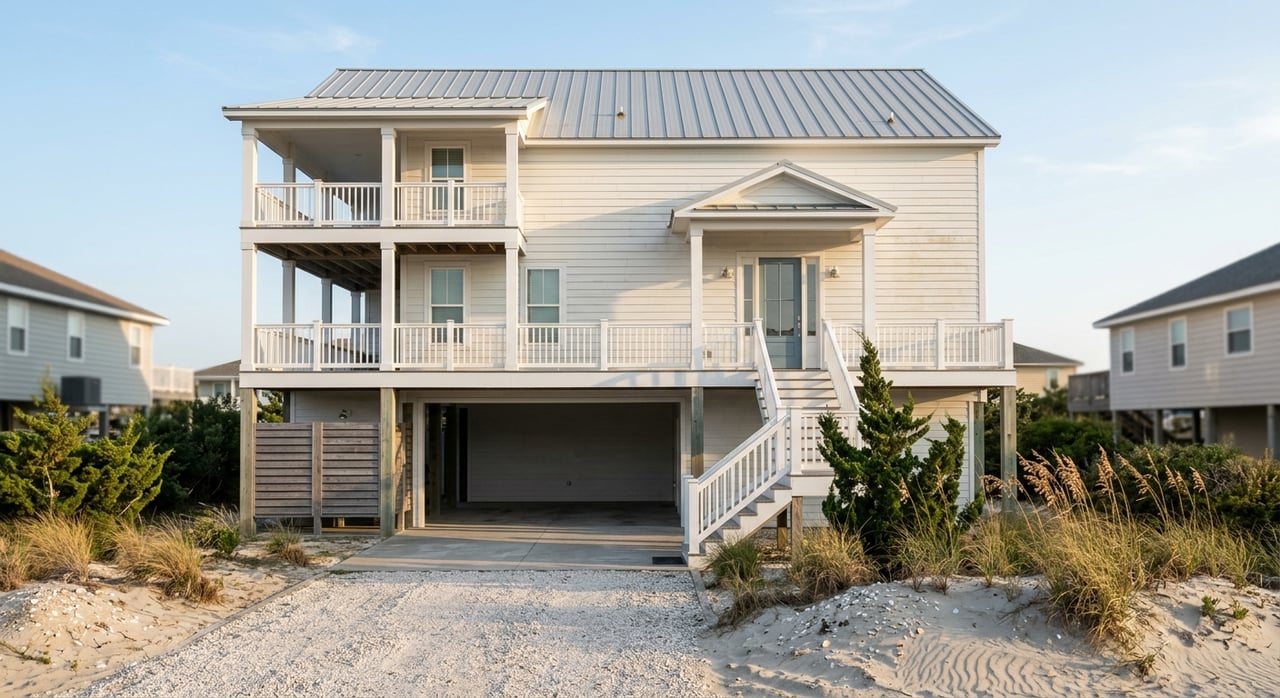
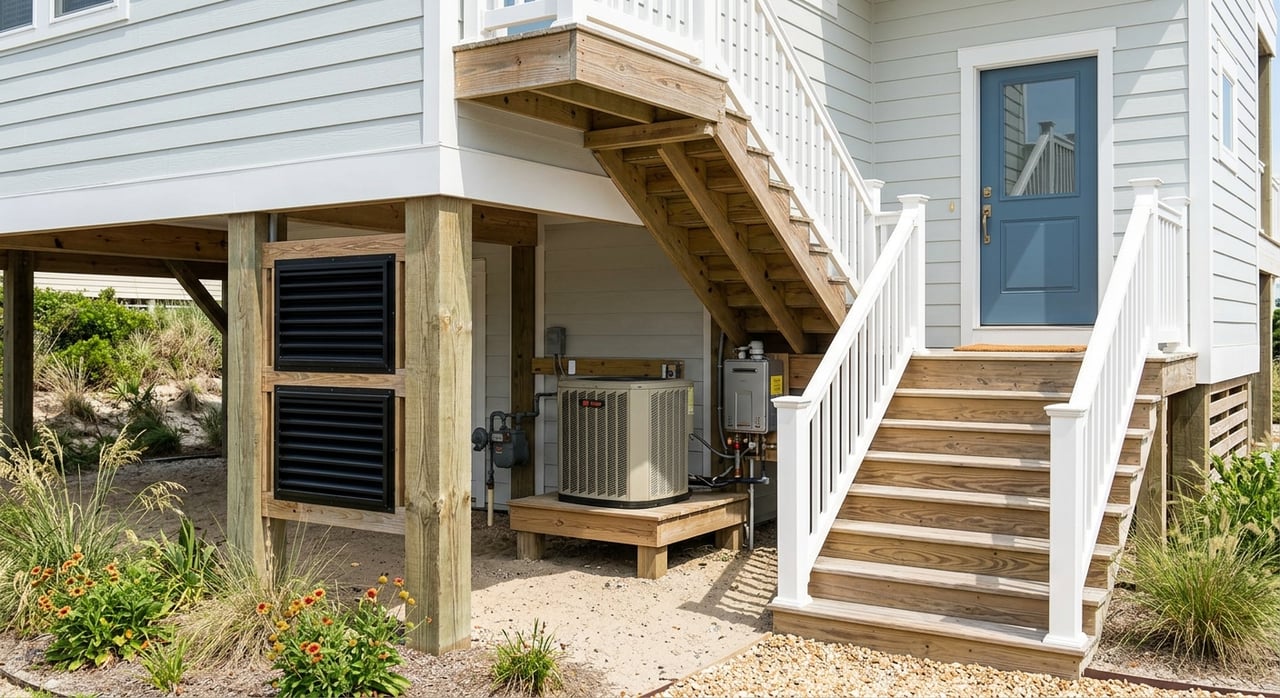
Kitty Hawk also requires below-elevation enclosures to be non-habitable, flood-opened, and limited to parking, access, or limited storage. Utilities and HVAC also need to be elevated to the required level. If you see finished-looking space below the required elevation, that should prompt more questions.
What actually affects flood insurance cost
A lot of buyers assume flood insurance is based only on the zone label. That is not how current pricing works. FEMA’s Risk Rating 2.0 overview for single-family homes says pricing can reflect flood frequency, multiple flood types, distance to water, foundation type, first-floor elevation, and cost to rebuild.
That means two homes in the same flood zone can still carry very different premiums. A higher first-floor elevation, a more open foundation, or a different rebuild value can all change the quote.
Foundation type matters too. FEMA has noted that homes elevated on posts, piles, or piers can rate better than similar homes with enclosed lower areas or other foundation types when other variables are similar.
Why elevation certificates still matter
If a home has an Elevation Certificate on file, it can be a very useful document during due diligence. Kitty Hawk Planning and Inspections can help review floodplain files, provide copies of Elevation Certificates on file, and assist with map determinations through the town’s flood information resources.
An Elevation Certificate can help you understand how the structure relates to the mapped flood elevation. It can also give your insurance discussions more precision than relying on a map label alone.
Flood, wind, and hail are not the same policy
This is one of the biggest points of confusion for Outer Banks buyers. In North Carolina, basic homeowners insurance does not normally cover flood damage, and some coastal policies may also exclude windstorm or hail.
If windstorm and hail are excluded, that coverage is often written separately through the North Carolina Insurance Underwriting Association, also called the Coastal Property Insurance Pool, with its own deductible. Flood insurance is separate again, typically through the NFIP or another flood carrier.
This means your total insurance picture may involve:
- A homeowners policy
- A separate windstorm and hail policy
- A separate flood insurance policy
When you compare quotes, make sure you are comparing the same coverage split and limits. Otherwise, two numbers can look different simply because the policies are not built the same way.
Know how storm damage is divided
After a hurricane or nor’easter, claim handling can depend on what caused the damage. FEMA’s guidance on wind versus floodwater damage explains that wind-driven rain is not covered under a flood policy.
That is why buyers should ask very direct questions before closing. If roof damage leads to water intrusion, that may be treated differently than rising floodwater entering the home from outside.
Timing matters before closing
Flood insurance is not something to leave for the last week of escrow. FEMA states that NFIP policies usually have a 30-day waiting period before coverage starts unless an exception applies.
Lender rules matter too. Homes in high-risk flood areas with mortgages from government-backed lenders are required to carry flood insurance. Kitty Hawk participates in the NFIP, so eligible local properties can obtain federally backed flood coverage.
For single-family homes, standard NFIP coverage generally tops out at $250,000 for the building and $100,000 for contents. If you are buying a higher-value property, that is another reason to talk through the structure of coverage early.
A smart due diligence checklist
Before you buy in Kitty Hawk, try to gather as much flood and insurance information as possible during the contract period.
Records to request
Ask for:
- Current flood zone
- Base flood elevation
- Design flood elevation if available
- Any Elevation Certificate on file
- Floodplain development records
- Any V-zone certifications if the property is in VE or had major additions
Kitty Hawk’s flood resources note that Planning and Inspections can help compare the parcel against FEMA maps, county layers, and any records on file when questions come up.
Insurance questions to ask
When speaking with insurance professionals, ask:
- Is the flood quote for building coverage, contents coverage, or both?
- Are windstorm and hail included in the homeowners policy or written separately?
- What deductible applies to the wind and hail portion?
- How would the carrier treat wind-driven rain versus floodwater after a storm?
- Are the quote limits the same across every policy you are comparing?
These questions can help you avoid surprises after closing.
Inspection items to review
During inspections, pay close attention to:
- Lowest-floor height
- Foundation type
- Flood vents or compliant openings
- Breakaway wall features where applicable
- HVAC placement
- Electrical equipment elevation
- Any lower-level enclosures that appear finished or heavily improved
In AE, AH, and AO areas, below-elevation space should be non-habitable and have compliant flood openings. In VE, buyers should verify piles, breakaway walls, and the absence of structural fill.
The practical takeaway for Kitty Hawk buyers
In Kitty Hawk, flood risk is part of coastal ownership, but it does not have to be a mystery. The most helpful approach is to look beyond the zone label and review the whole picture: map location, elevation data, construction details, and how flood, wind, and homeowners coverage fit together.
That kind of review can make a real difference in your comfort level and your carrying costs. If you want local guidance as you compare properties, ask questions, and line up the right due diligence, Suzanne Baer can help you make a more informed move on the Outer Banks.
FAQs
What flood zone tools should buyers use for a Kitty Hawk home?
- Buyers should start with the official FEMA Flood Map Service Center, then review local parcel details through the Dare County flood-zone webmap and Kitty Hawk property resources.
What does Zone AE mean for a home purchase in Kitty Hawk?
- Zone AE means the property is in the base floodplain and has a published base flood elevation, so you should closely review the home’s elevation, enclosure use, utilities, and insurance quote details.
What makes flood insurance cost more for a Kitty Hawk property?
- Flood insurance pricing can be affected by factors such as flood frequency, distance to water, foundation type, first-floor elevation, and rebuild cost, so two homes in the same zone may still price differently.
What insurance policies should buyers review for a Kitty Hawk property?
- Buyers should review homeowners coverage, confirm whether windstorm and hail are included or separate, and obtain a separate flood insurance quote because flood damage is not normally covered by a standard homeowners policy.
What local records should buyers request for a Kitty Hawk flood-zone property?
- Buyers should ask for the current flood zone, base flood elevation, any Elevation Certificate, floodplain development records, and any V-zone certifications that may apply to the property.
When should buyers arrange flood insurance for a Kitty Hawk closing?
- Buyers should start early in the contract period because NFIP policies usually have a 30-day waiting period before coverage begins unless an exception applies.